
Langtang Valley Trek Itinerary: Day-by-Day Guide
.png)
11th Jul, 2026
- annapurnaencounter
At just 32km north of Kathmandu, the Langtang Valley Trek packs a full Himalayan experience — glacial rivers, rhododendron forest, a 7,227m peak towering directly over the trail, and a centuries-old monastery — into one of the shortest classic treks in Nepal. Here's exactly what each day looks like, from the drive out of Kathmandu to the drive back in.
Table of Contents
Langtang Valley Trek at a Glance
- Duration: 7 days (core itinerary), 8–9 days with an acclimatization/Kyanjin Ri day added
- Max altitude: 3,750m at Kyanjin Gompa (4,773m if you add the optional Kyanjin Ri hike)
- Difficulty: Moderate — sustained daily walking at altitude, no technical climbing
- Start/end point: Kathmandu (via Syabrubesi)
- Best season: March–May and September–November
- Permits required: Langtang National Park Entry Permit, TIMS Card
Day-by-Day Itinerary
Day 1: Kathmandu → Syabrubesi (1,470m)
The trek begins with a scenic 6–7 hour drive through Trisuli Bazaar and Dhunche, winding through terraced hillsides and farming villages before descending into Syabrubesi, the gateway town to Langtang National Park. This is your first glimpse of the Langtang range in the distance.
Day 2: Syabrubesi → Lama Hotel (2,200m)
Trekking starts in earnest. The trail climbs through terraced fields before entering cool rhododendron and oak forest, following the Trisuli River upstream. It's a moderate first day — around 6 hours — designed to ease you into the rhythm of daily trekking before the valley opens up further ahead.
Day 3: Lama Hotel → Langtang Village (3,307m)
A gentler morning walk through pine, hemlock, and rhododendron forest brings you to Ghoretabela for lunch, then the trail climbs into alpine woodland for the afternoon. Around 5 hours of walking. This is typically the first day you'll notice the altitude, and Langtang Village itself — rebuilt after the 2015 earthquake — is a moving stop on the route.
Day 4: Langtang Village → Kyanjin Gompa (3,750m)
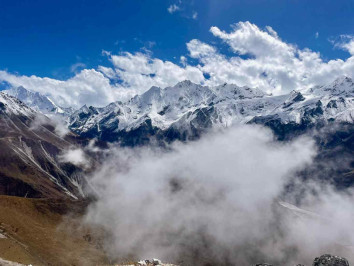
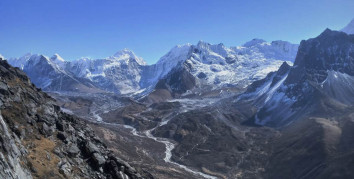
A shorter day, roughly 4 hours, following mani prayer walls (walked clockwise, per Buddhist tradition) as the valley widens to reveal Langtang Lirung's icefall up close. You'll typically arrive at Kyanjin Gompa by early afternoon, leaving the rest of the day free to explore the centuries-old monastery or simply rest at altitude.
Day 5: Acclimatization Day — Kyanjin Ri or Tserko Ri (optional, 4,773m–4,984m)
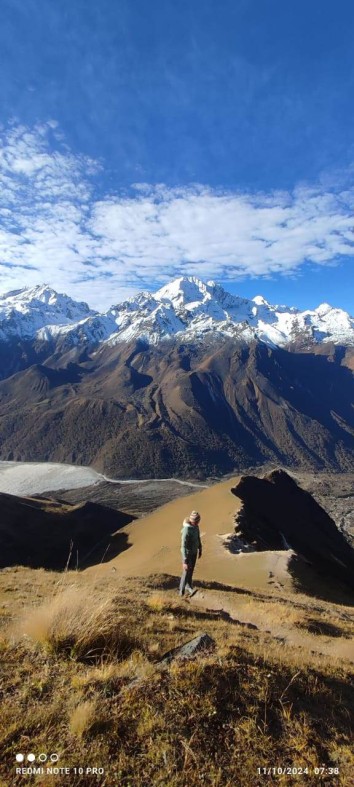
If your itinerary includes it — and we'd recommend it — this is the highlight day for many trekkers. Kyanjin Ri (4,773m) or the higher, more demanding Tserko Ri (4,984m) both deliver 360-degree Himalayan panoramas that the valley floor doesn't offer. It's a full-day round trip from Kyanjin Gompa and doubles as valuable acclimatization before you begin the descent. This day is what turns the trip into an 8-day itinerary; it's entirely optional but genuinely worth the extra day.
Day 6 (or 5 without the acclimatization day): Kyanjin Gompa → Lama Hotel (2,350m)
You retrace the trail downhill, seeing the valley's scenery unfold in reverse. It's an easier day physically — roughly 6 hours — as you descend and the air thickens back toward Lama Hotel on the upper Trisuli River.
Day 7 (or 6): Lama Hotel → Syabrubesi (1,470m)
The final trekking day, around 6 hours, follows the familiar trail downhill past farming villages and terraced fields, crossing a suspension bridge before arriving back in Syabrubesi for your last night on the trail.
Day 8 (or 7): Syabrubesi → Kathmandu
A final 6–7 hour drive back to Kathmandu along the same scenic highway, arriving in the afternoon.
7-Day vs 8-Day: Which Should You Choose?
The core 7-day itinerary (without the dedicated Kyanjin Ri day) is genuinely complete and reaches Kyanjin Gompa's iconic monastery and glacier views. But if your schedule allows one extra day, the 8-day version — adding the Kyanjin Ri or Tserko Ri acclimatization hike — is worth it for the panoramic mountain views alone, and gives your body a better altitude buffer before descending. We build both versions for clients and will help you decide based on your fitness level, dates, and how much you want to see above 4,000m.
Altitude Profile at a Glance
| Day | Route | Altitude |
|---|---|---|
| 1 | Kathmandu → Syabrubesi | 1,470m |
| 2 | Syabrubesi → Lama Hotel | 2,200m |
| 3 | Lama Hotel → Langtang Village | 3,307m |
| 4 | Langtang Village → Kyanjin Gompa | 3,750m |
| 5 (optional) | Kyanjin Ri / Tserko Ri day hike | 4,773m–4,984m |
| 6 | Kyanjin Gompa → Lama Hotel | 2,350m |
| 7 | Lama Hotel → Syabrubesi | 1,470m |
| 8 | Syabrubesi → Kathmandu | — |
How Difficult Is This Itinerary?
Rated moderate — there's no technical climbing or exposed scrambling anywhere on the route. The real challenge is sustained daily walking, 4 to 7 hours depending on the day, with the altitude becoming noticeable from Langtang Village onward. A solid base of general walking fitness is enough preparation; you don't need prior high-altitude trekking experience, though it certainly helps.
Permits You'll Need
permit cover the entire route:
- Langtang National Park Entry Permit
Why This Itinerary Works So Well as a Short Himalayan Trek
Langtang packs an outsized experience into a short window because the drive to the trailhead is so short — you're trekking within a day of leaving Kathmandu, unlike Everest (which needs a Lukla flight) or Annapurna Circuit's longer approach. Combined with reliable teahouse infrastructure and mobile coverage in most villages, it's one of the more forgiving short treks for a first-time visitor to the Nepal Himalaya.
As a private-departure operator, we run this itinerary on your dates, not a fixed group schedule — including the choice between the 7-day and 8-day versions, and the pace of each day.
Planning your Langtang trek? See our Langtang Valley Trek packages — private guide, all permits arranged, and an itinerary built around your dates.
FAQ
How many days does the Langtang Valley Trek take? The core itinerary is 7 days from Kathmandu and back. Adding the Kyanjin Ri or Tserko Ri acclimatization hike makes it 8 days.
What is the highest point on the Langtang Valley Trek? Kyanjin Gompa at 3,750m is the highest point on the core route. With the optional side hike, Kyanjin Ri (4,773m) or Tserko Ri (4,984m) become the trek's true high points.
Do I need previous trekking experience for Langtang? No. It's rated moderate difficulty and suits fit beginners with general walking fitness — no technical climbing skills are required.
What permits do I need for the Langtang Valley Trek? A Langtang National Park Entry Permit and a TIMS card. Both are arranged through your trekking agency before departure.
Is the Kyanjin Ri hike worth the extra day? For most trekkers, yes — it delivers the trip's best 360-degree mountain panorama and adds useful acclimatization before you descend.
Recent From Travel Guide
.jpg)
18th Jan, 2023
_11zon.jpg)
18th Jan, 2023

18th Jan, 2023

18th Jan, 2023

8th Dec, 2023
9th Dec, 2023
.jpg)
11th Feb, 2025
13th Dec, 2023
_11zon.jpg)
18th Dec, 2023
.jpg)
.jpg)
2nd Jan, 2024
3rd Jan, 2024
.jpg)
_11zon.jpg)
_11zon.jpg)
23rd Jun, 2025

24th Jan, 2024
.jpg)
30th Jan, 2024

4th Feb, 2024

5th Feb, 2024
-4.jpg)
6th Feb, 2024
.jpg)

12th Feb, 2024
.jpg)
_11zon.jpg)
18th Feb, 2024
.png)
-1.jpg)
7th Mar, 2024
.jpg)
12th Mar, 2024
13th Mar, 2024
20th Mar, 2024
.jpg)
26th Mar, 2024
-1.jpg)

14th Jan, 2025

14th Jan, 2025
16th Jan, 2025

18th Jan, 2025

20th Jan, 2025

24th Jan, 2025
.jpg)

5th Feb, 2025

5th Feb, 2025
9th Feb, 2025
3rd Apr, 2025
.jpg)
11th Apr, 2025

16th Apr, 2025
20th Apr, 2025
-1.jpg)
.jpg)
27th May, 2025
14th Jun, 2025

15th Jun, 2025
17th Jun, 2025
18th Jun, 2025
19th Jun, 2025
23rd Jun, 2025
24th Jul, 2025
3rd Sep, 2025
26th May, 2026
.jpg)
10th Jul, 2026
.png)